Soothing a stressed cat often means doing less than instinct suggests. Many loving owners want to scoop up, stroke, and reassure immediately. Cats may experience that attention as pressure. Stress changes how they process sound, movement, and touch. A better response begins with distance, observation, and environmental comfort. A cat soothing approach helps owners slow down. The goal is to make the room feel safer. Once safety returns, affection can return naturally. Listening first protects trust.
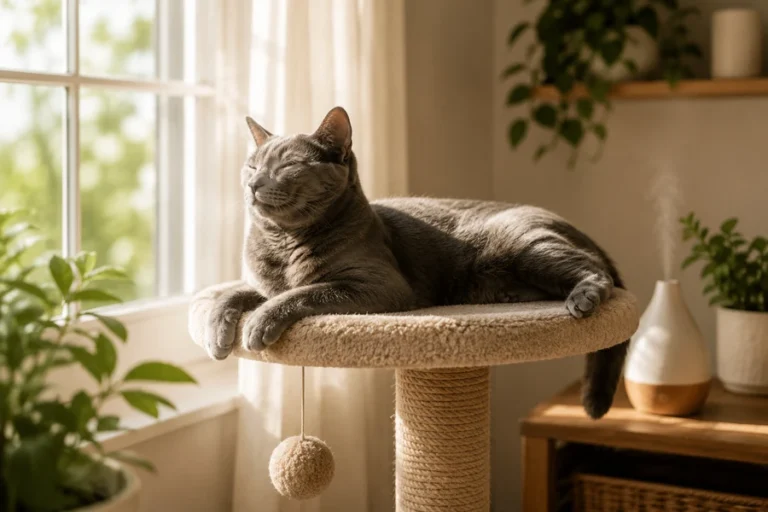
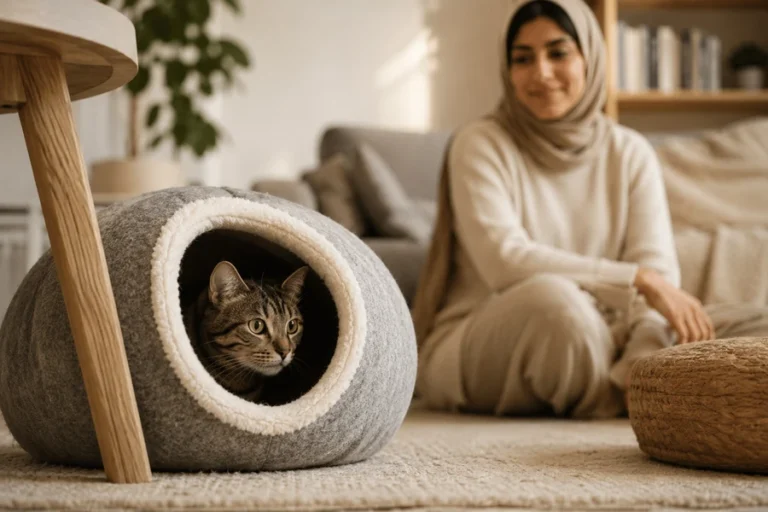
Space allows a cat to regulate fear. A hiding cat is not being rude. It is choosing protection. Soothing a stressed cat starts by honoring that choice. Sit nearby only if your presence helps. Avoid blocking exits. Keep other pets away. Lower household noise where possible. Let the cat watch from a distance. Trust grows when the cat controls approach. A calm room can speak louder than busy reassurance.
Familiar scent helps cats recognize safety. Keep favorite blankets available during changes. Avoid washing every familiar item at once. Place bedding near quiet resting areas. Introduce new furniture gradually. Let cats rub and investigate. Scent carries emotional information. A feline relaxation routine can include scent-preserving habits. Soothing a stressed cat becomes easier when home still smells like home. Familiarity reduces uncertainty.
Change can unsettle even confident cats. Moving, renovations, visitors, babies, and new pets all disrupt predictability. Soothing a stressed cat during these periods requires planning. Create a quiet base room before chaos begins. Keep food, water, litter, and bedding stable. Visit calmly without crowding. Use play when the cat seems receptive. A stress-free cat transition supports gradual adjustment. Slower introductions often prevent long-term anxiety. Stability should lead every change.
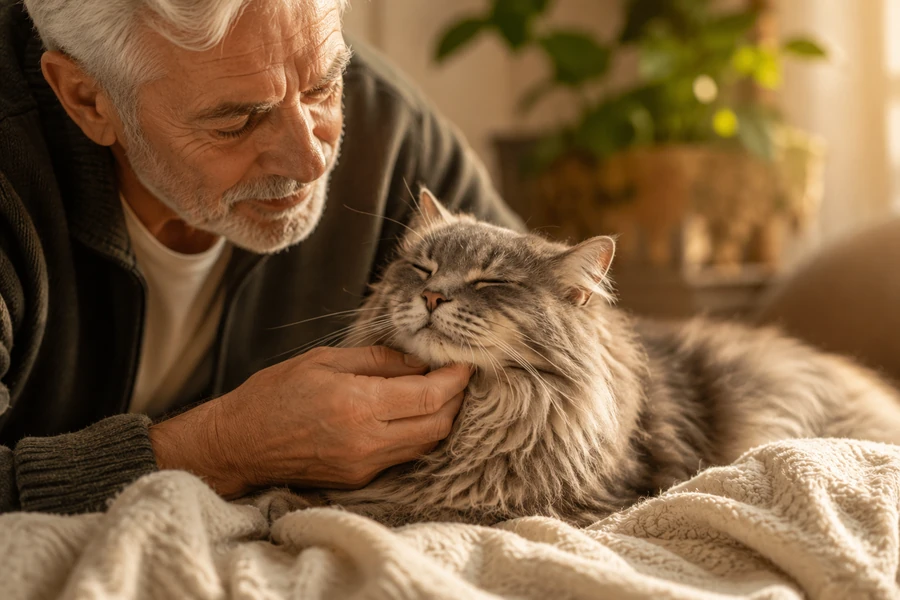
Touch helps only when the cat welcomes it. Watch for leaning, slow blinking, or relaxed posture. Stop before the tail flicks sharply. Keep strokes predictable and brief. Voice should stay low and even. Avoid high excitement during recovery. Timing matters more than affection intensity. Soothing a stressed cat means reading consent clearly. Cats trust people who stop when asked. Respectful touch makes future contact easier.
Play can rebuild confidence after stress. Wand toys create safe distance. Short sessions prevent overwhelm. Let the cat stalk, chase, and pause. Do not force play during hiding. Try again later. End sessions with calm success. Food puzzles may help curious cats re-engage. Soothing a stressed cat through play works because movement restores agency. The cat remembers it can affect the environment safely.
Some stress does not resolve with home changes alone. Refusing food, hiding for long periods, aggression, or litter issues require attention. Soothing a stressed cat should include veterinary support when signs persist. Pain and illness often hide behind behavior changes. Behavior specialists can help with complex introductions or ongoing fear. Keep notes on triggers and timing. Share videos when useful. Professional help is not failure. It is another form of care.


Leave a comment