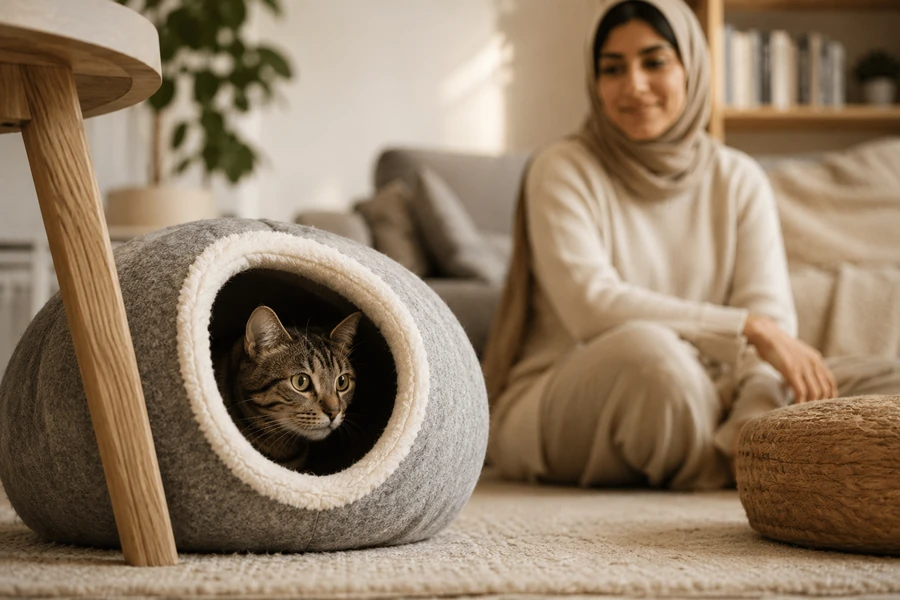
Calm a stressed cat begins with observation, not immediate intervention. Cats often hide discomfort behind stillness, avoidance, or sudden irritability. Owners may rush to soothe them and accidentally increase pressure. Stress can come from noise, guests, moving furniture, new pets, medical discomfort, or changed routines. A cat calming strategy helps owners respond with more care. The goal is not to force affection. It is to make safety easier to choose. When cats feel control returning, their bodies soften. Trust follows patience.
Cats process stress through distance and control. A dog may seek reassurance quickly. A cat may need space before contact feels welcome. Calm a stressed cat by letting the animal decide when to approach. Watch the tail, ears, pupils, posture, and hiding patterns. Avoid cornering or lifting a frightened cat. Speak softly, then step back. Safety grows when pressure decreases. Patience communicates respect more clearly than constant touching. The calmest response often looks beautifully uneventful.
Household stress can arrive through ordinary changes. New furniture changes familiar scent paths. Loud appliances interrupt resting spots. Visitors bring movement and unfamiliar smells. Another animal may disrupt territory. A dirty litter box can create tension quickly. Medical pain may appear as behavior change. A feline stress support plan helps owners identify patterns. Calm a stressed cat by looking beyond the obvious. The trigger may be quieter than expected.
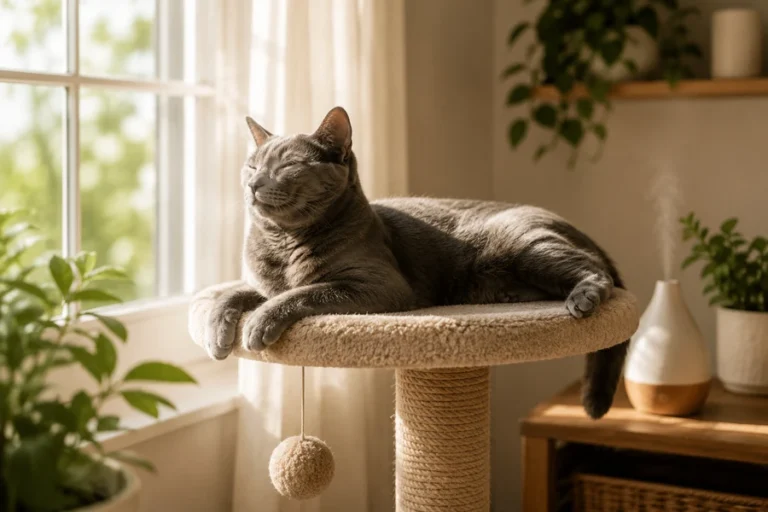
Safe spaces give cats choices during overwhelming moments. Provide elevated perches when possible. Offer covered beds or quiet rooms. Keep food, water, and litter accessible. Avoid placing everything in busy areas. Calm a stressed cat by protecting retreat zones from interruption. Children should learn not to pull cats from hiding. Guests should ignore nervous cats until invited closer. A cat comfort routine can make those spaces more predictable. Security improves when escape routes stay open.
Body language offers early clues. Flattened ears show tension. A twitching tail may mean agitation. Dilated pupils can signal fear or excitement. Slow blinking often shows comfort. Crouching suggests uncertainty. Excessive grooming may reveal stress. Hissing asks for distance. Calm a stressed cat by respecting these signals before escalation. Owners who notice early signs can reduce conflict. Better timing prevents scratches, hiding, and long recovery periods.
Cats rely heavily on scent and routine. Sudden changes can make familiar rooms feel strange. Keep feeding times steady. Introduce new items gradually. Leave favorite blankets available during transitions. Use play as predictable enrichment. Avoid moving litter boxes abruptly. Calm voices help maintain emotional consistency. Calm a stressed cat by restoring familiar anchors. Predictability gives the nervous system fewer surprises to manage.
Some stress needs veterinary attention. Appetite loss, litter box changes, aggression, or hiding can signal medical concerns. Do not assume every behavior issue is emotional. Pain often changes personality. A veterinarian can rule out health problems. Behavior professionals can help with complex household dynamics. Document changes before appointments. Include timing, triggers, and appetite details. Calm a stressed cat by taking persistent signs seriously. Compassion includes knowing when expert help is needed.



Leave a comment