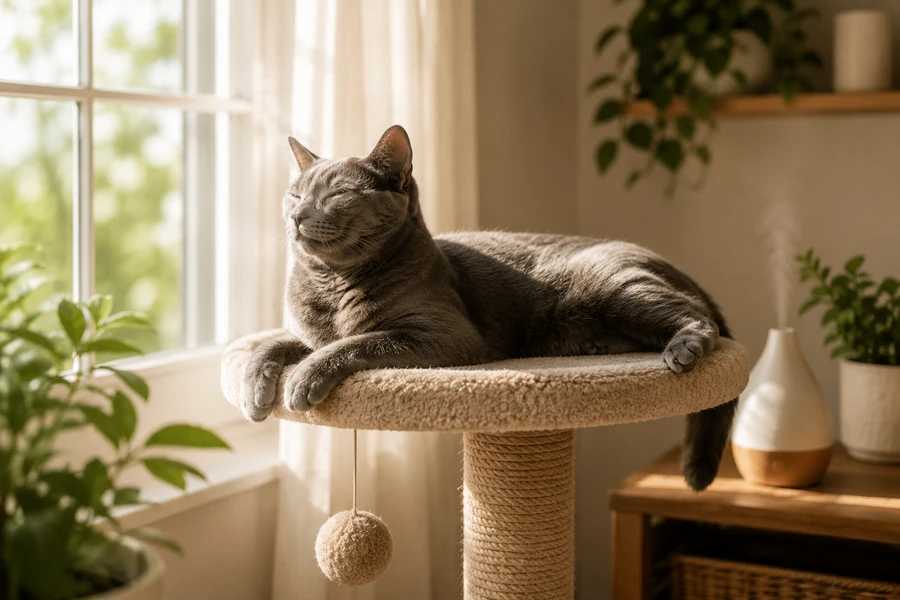
Cat stress relief works best when owners create safety instead of demanding closeness. Cats feel secure when they can retreat, observe, and choose contact. Stress may appear after travel, renovations, schedule changes, new pets, or unfamiliar guests. It may also come from pain or illness. Owners often notice hiding, overgrooming, appetite shifts, or sudden aggression. A cat anxiety support resource helps decode those signals. The best response feels steady rather than dramatic. Small environmental changes can calm the home quickly. Cats relax when control returns.
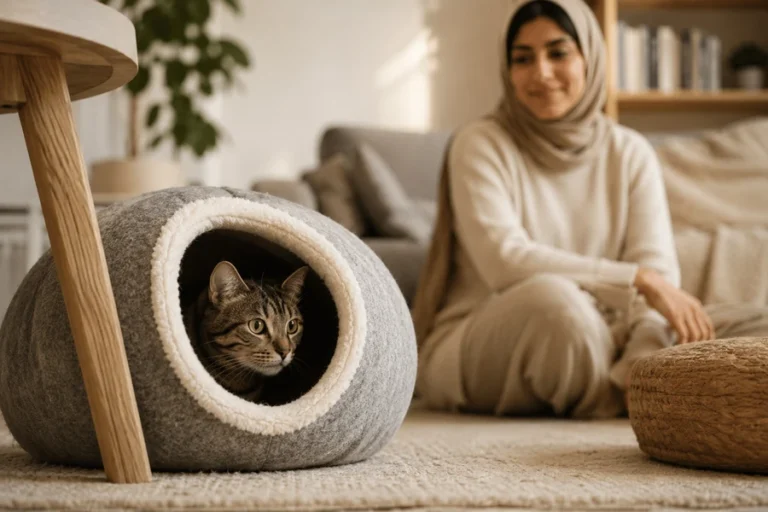
Choice is central to feline comfort. A stressed cat wants options, not pressure. Cat stress relief should include hiding places, high spaces, and quiet exits. Forced cuddling can make fear worse. Chasing a hiding cat breaks trust. Letting the cat approach restores confidence. Owners can sit nearby without reaching. Soft voices help, but silence may help more. Respect builds safety over time. Choice tells the cat it can protect itself.
Simple environmental improvements can reduce tension. Add vertical spaces where your cat can observe safely. Keep litter boxes clean and accessible. Separate food and water when possible. Place resting areas away from traffic. Reduce sudden loud sounds. Use familiar bedding during changes. A feline comfort setup makes the home feel more stable. Cat stress relief often begins with layout. The room should support retreat, not confrontation.
Routine gives cats emotional landmarks. Feeding at similar times reduces uncertainty. Play sessions create healthy release. Quiet evening rituals can signal safety. Cat stress relief improves when daily patterns stay recognizable. Sudden changes should happen gradually when possible. New pets need slow introductions. New furniture needs scent adjustment time. A calm cat routine helps owners stay consistent. Predictability creates peace without constant intervention.
Behavior gives clues before stress becomes obvious. Hiding may show fear. Excessive vocalizing can show distress. Swatting may ask for space. Litter box issues may signal medical or emotional problems. Overgrooming deserves attention. Reduced appetite should never be ignored. Cat stress relief requires owners to pause before reacting. The question should be what changed recently. Better observation leads to better support. Calm responses prevent tension from spreading.
Play can redirect nervous energy. Wand toys allow distance and movement. Puzzle feeders add mental engagement. Window perches provide quiet stimulation. Short sessions work better than overwhelming bursts. Let the cat end interaction when needed. Avoid using hands as toys. Cat stress relief should feel enjoyable, not demanding. Gentle enrichment builds confidence. A cat that plays comfortably often feels safer in its territory.
Persistent stress deserves professional review. Sudden aggression can reflect pain. Appetite changes may become urgent. Litter box avoidance can signal urinary issues. Excessive hiding may point to illness. Cat stress relief should include medical awareness. Owners should track timing and symptoms. Videos can help veterinarians understand behavior. Early help prevents suffering. Emotional support and medical care often work together.



Leave a comment