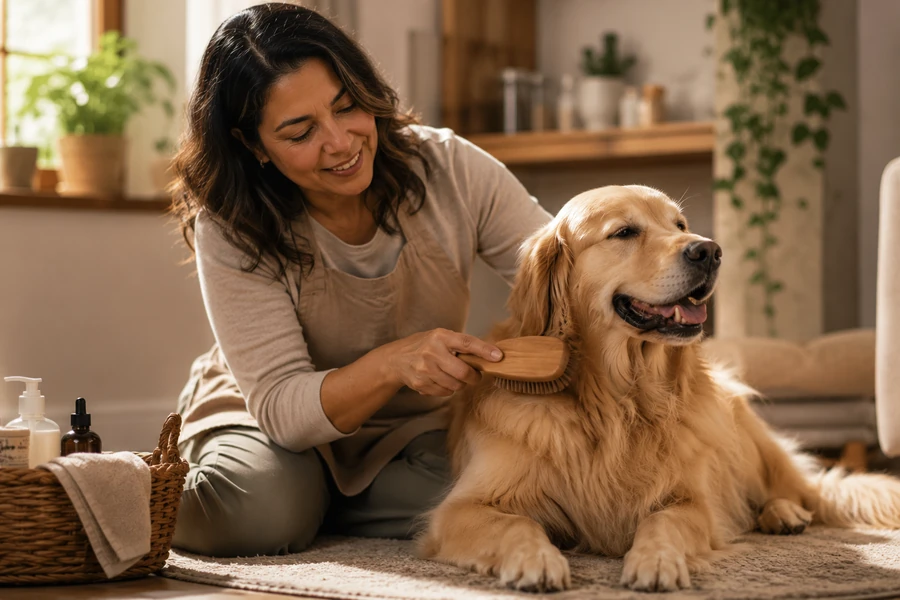
Dog grooming at home works best when it feels calm, predictable, and respectful. Many owners begin because they want to save time or money. Others want their dogs to feel safer between professional visits. Grooming is more than appearance. It supports skin health, coat comfort, paw care, and trust. Dogs notice your mood during each step. A rushed session can create resistance quickly. A steady home grooming system helps owners build confidence. The goal is not salon perfection. It is a cleaner, calmer dog who trusts your hands.
Touch becomes easier when dogs know what to expect. Regular brushing teaches them that handling can feel safe. Paw checks become less dramatic with repetition. Ear care feels less threatening when introduced gently. Dog grooming at home gives owners more chances to notice changes. Lumps, irritation, ticks, and sore spots become easier to catch. Trust grows when sessions stay short at first. Rewards should appear before patience runs out. Calm repetition matters more than speed. Grooming becomes communication instead of a chore.
The environment affects behavior immediately. Choose a quiet area with good light. Keep tools within reach before starting. Use a non-slip surface for safety. Remove distractions when possible. Speak in a steady voice. Let your dog sniff tools before use. A dog grooming routine planner can help organize steps. Dog grooming at home improves when the space feels familiar. Dogs relax faster when nothing feels sudden.
Tool choices should match coat type and comfort level. Slicker brushes help many longer coats. Rubber curry brushes suit some short coats. Detangling combs prevent small knots from becoming mats. Nail trimmers require care and good lighting. Dog-safe shampoo protects skin better than human products. Towels should be ready before bath time starts. Dog grooming at home feels easier with fewer surprises. A pet parent grooming resource can clarify what belongs in your kit. Better tools reduce stress for both sides.
Start with brushing before baths whenever possible. Water tightens mats and makes them harder to remove. Use lukewarm water and gentle pressure. Protect eyes and ears carefully. Rinse thoroughly because residue can irritate skin. Drying should be patient and warm, not hot. Some dogs tolerate dryers slowly. Others prefer towel drying with breaks. Dog grooming at home improves when you read body language. A relaxed dog gives you better cooperation over time.
Nail care often creates the most tension. Begin by touching paws without trimming. Reward calm behavior generously. Trim tiny amounts when you feel ready. Stop before your dog panics. Sensitive areas need shorter sessions and softer handling. Never force a full routine during one stressful attempt. Professional help remains useful for difficult nails. Dog grooming at home should support confidence, not create fear. Progress can happen one paw at a time.
A sustainable schedule prevents marathon sessions. Brush a little before tangles build. Check paws after outdoor walks. Clean ears only as recommended. Bathe according to coat and skin needs. Track what your dog tolerates well. Adjust tools when something creates discomfort. Dog grooming at home becomes easier with repetition. The habit also strengthens awareness. Over time, grooming feels less like maintenance and more like care expressed through attention.

Leave a comment