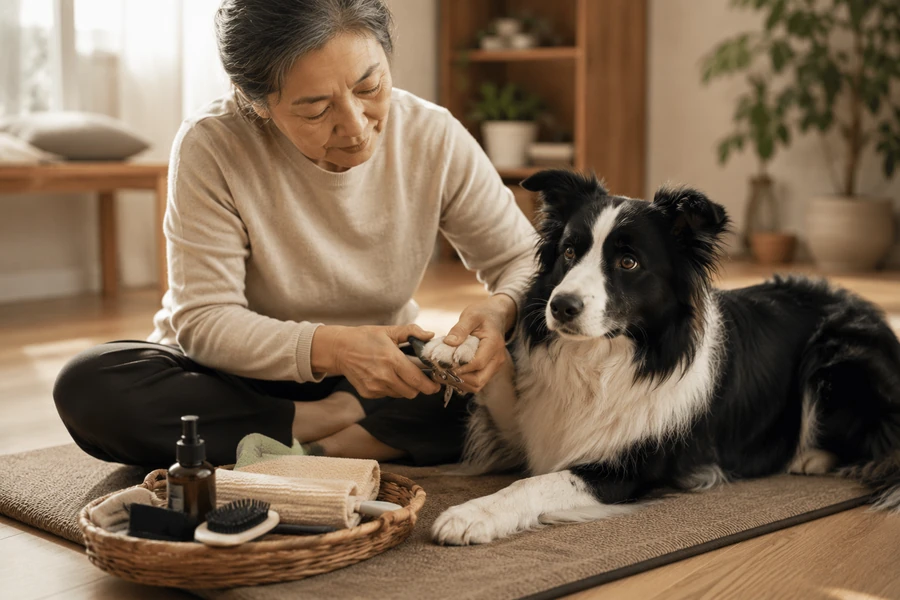
A dog grooming routine gives structure to care that many owners handle only when problems appear. Waiting for mats, odor, long nails, or irritated skin creates unnecessary stress. Regular grooming keeps small issues visible and manageable. It also helps dogs accept handling with less fear. The routine should fit coat type, activity level, age, and temperament. A dog wellness grooming plan can help owners organize timing. This is not about vanity. It is about comfort, health, and connection. Consistent care makes daily life easier.
Grooming reveals what fur can hide. Skin irritation, parasites, burrs, swelling, and tenderness become easier to notice. A dog grooming routine also reduces shedding around the home. Brushing distributes natural oils through the coat. Paw checks catch cuts after walks. Ear checks may reveal odor or redness early. Nail maintenance supports better movement. Dogs benefit when care happens before discomfort grows. Owners gain confidence through repetition. Health awareness improves when grooming becomes normal.
Weekly structure keeps the routine realistic. Choose one or two short grooming windows. Pair them with existing habits. Brush after a walk. Check paws after outdoor play. Review ears during a quiet evening. Keep supplies in one place. A weekly grooming schedule makes follow-through easier. A dog grooming routine should feel possible during busy weeks. Small consistent sessions prevent larger battles later.
Different coats need different care. Short coats may still shed heavily. Double coats need thorough brushing during seasonal changes. Curly coats can mat close to the skin. Long coats require patience and sectioning. Wire coats may need specialized support. A dog grooming routine should respect those differences. Generic advice can miss important details. A coat-specific grooming resource helps owners choose better methods. Matching technique to coat type protects comfort.
Bathing frequency should depend on skin, coat, and lifestyle. Outdoor dogs may need more cleaning. Sensitive dogs may need gentler products. Too much bathing can dry skin. Too little can leave odor and buildup. Use dog-safe shampoo. Rinse thoroughly every time. Dry carefully, especially in thick coats. A dog grooming routine should include bathing without making it excessive. Balance keeps the coat clean while protecting natural oils.
Handling should be practiced outside full grooming sessions. Touch ears, paws, tail, and chest gently during calm moments. Reward relaxed responses. Stop before irritation builds. Introduce tools slowly. Let your dog investigate brushes and clippers. Avoid surprise movements. Praise cooperation clearly. A dog grooming routine improves when training supports it. Dogs feel safer when they understand each step before it happens.
No routine should stay rigid forever. Puppies change quickly. Senior dogs may need softer handling. Seasonal weather affects coat and paws. Allergies can shift skin needs. Activity changes create different messes. Review your schedule monthly. Notice what creates stress. Keep what works and adjust what does not. A dog grooming routine succeeds because it remains responsive. Practical care adapts with the dog in front of you.


Leave a comment